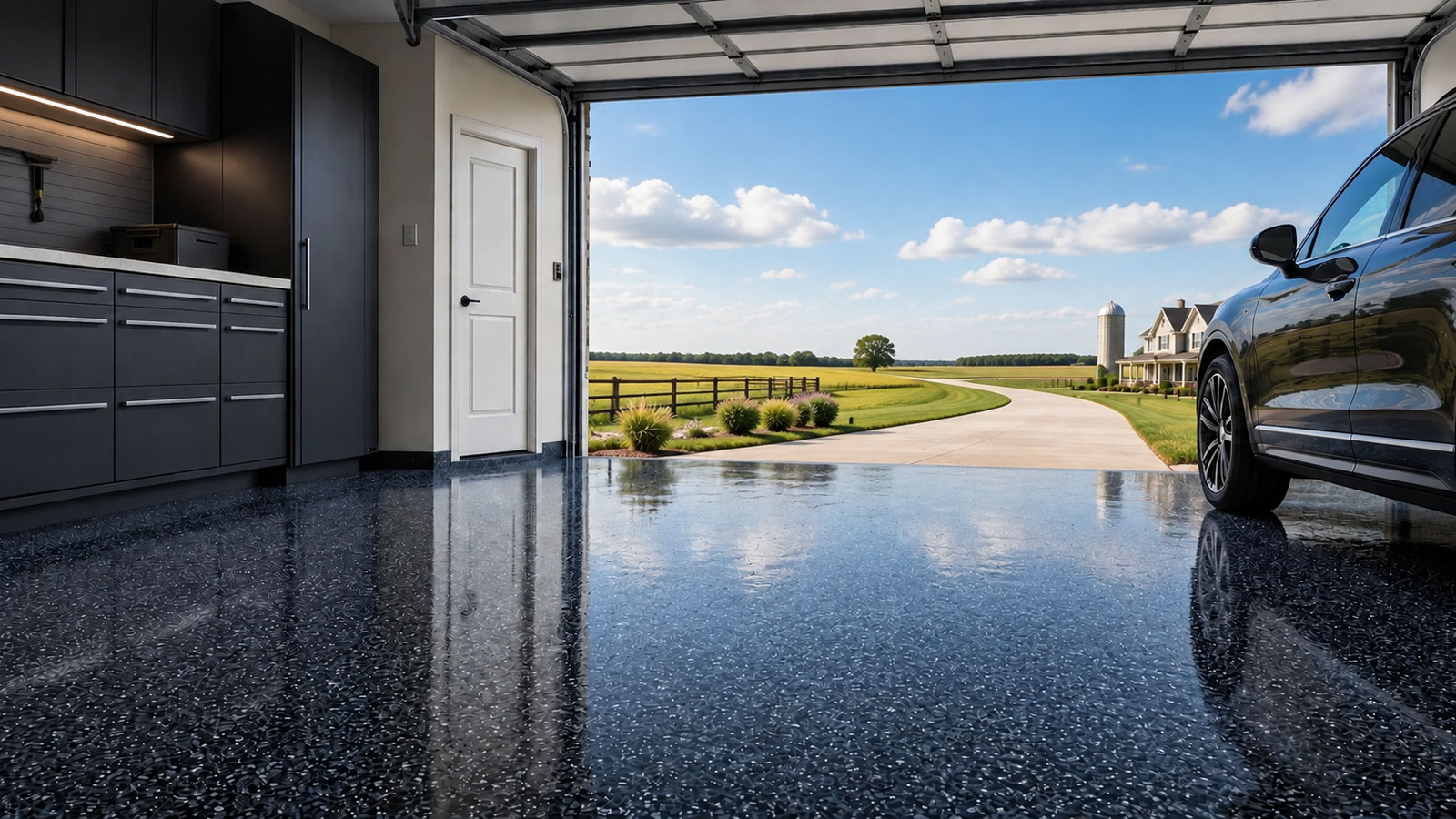
Garage Floor Coatings in Garden Ridge, TX
Practical epoxy, polyaspartic and garage floor coating guidance for Garden Ridge property owners.
Floor Coating Information for Garden Ridge, TX
Garden Ridge is a smaller residential municipality on the northern side of the northeast San Antonio corridor, and its property context deserves more care than a generic suburban coating pitch. Its Planning and Zoning Commission, established in 1988, reviews subdivision plats, master plans and zoning proposals, while the city's development resources include a Master Land Use Plan, street plan and building controls. None of those documents establishes the exact age or configuration of a private garage, but they underscore the importance of evaluating each property instead of presuming identical two-car slabs.
Garden Ridge also has a documented stormwater-management program. The city established Stormwater Pollution Control Ordinance 191 and publishes municipal stormwater reports and plans to help protect area creeks and streams. Public Works explicitly handles street drainage and stormwater runoff. Those municipal measures are not proof that a particular home has water intrusion. A floor coating estimate should focus on actual driveway slope, roof discharge, recurring wet areas and any evidence that water has crossed the garage threshold.
Warm Texas weather adds installation conditions to the equation. At an open garage door, direct sun can heat the exposed floor differently from shaded areas. The most useful epoxy or polyaspartic recommendation is based on the concrete's previous finishes, cracks, oil or other residues, surface-preparation needs, desired texture and workable curing schedule—not on a claim that one product always fits every Garden Ridge garage.
Local Market Insight
Garden Ridge's stormwater ordinance, published MS4 planning and ongoing drainage maintenance provide strong local context for evaluating each lot's actual water movement without assuming flood or moisture damage.
What Affects Garage Floor Coating Cost in Garden Ridge?
A Garden Ridge estimate should reflect the specific garage and driveway rather than a standardized suburban assumption. Attached garages, private workshops, storage areas and different surface histories can demand different labor even with similar floor areas.
What matters is the written scope of existing-coating removal, concrete grinding, crack repair, edge treatment and the complete finish. If site drainage needs correction, the quote should distinguish that separate work from the coating installation.
- Previous finishes and sealers: A floor that has been painted, sealed or coated before can need extensive removal before a new system bonds. The installer should inspect rather than assume bare concrete.
- Cracks, patches and wear: Surface pitting, patched joints, movement and damaged thresholds change repair scope. A decorative finish cannot substitute for needed concrete work.
- Property-specific runoff: Garden Ridge maintains a stormwater program, but municipal guidance does not reveal a home's water-entry history. Check roof drains, driveway grade and threshold conditions separately.
- Workshop or storage use: Where a garage doubles as a work area, oil, cleaners and equipment can affect required preparation and the choice of surface texture or coating system.
- Garage access and edge detail: Stem walls, stairs, cabinets and the need to move or protect stored belongings affect labor. Ask which vertical surfaces and transitions are included.
- Appearance and curing: Flake color, texture, topcoat and temperature-dependent scheduling can change both cost and when the garage returns to foot or vehicle traffic.
Call for a clear, project-specific estimate—or request one online.
Garden Ridge's Residential Setting Requires Slab-Specific Choices
Garden Ridge maintains its own planning and subdivision review system. The Planning and Zoning Commission was established in 1988, and current city resources include a Master Land Use Plan, Street Master Plan, building and zoning requirements and subdivision regulations. These local controls show that the community's development patterns are actively managed. They do not demonstrate that every home has a large garage, an older slab or any particular coating history.
A floor-coating professional should look at the garage itself: is the slab bare or sealed, have previous owners painted it, are there visible repairs, and is any cracking active? If the space is used for a workshop or vehicle maintenance, oils and other residues may penetrate the concrete. A careful preparation plan addresses those observations before discussing decorative finish choices.
Even relatively well-kept concrete may need proper surface profiling, cleaning and repair. Conversely, an older-looking garage does not automatically need a total slab replacement. Ask the installer to identify which findings require grinding, coating removal or a separate structural evaluation. That prevents a homeowner from overpaying for unnecessary work or buying a new finish over an unresolved defect.
When receiving bids, provide information on previous work, storage constraints, the frequency of vehicle use and whether the garage contains steps, drains or unusual edges. A complete proposal should identify the substrate preparation, coating layers, finish system, curing conditions and the time vehicles must remain out of the space.
Stormwater Ordinance 191 and Garden Ridge Garage Entries
Garden Ridge's Stormwater Pollution Control Ordinance 191 is part of the city's stated effort to prevent pollution entering local streams and creeks. The city's public-works department maintains streets and drainage, and the municipality publishes annual stormwater and MS4 program materials. These are well-documented local environmental and infrastructure practices, not a finding about a private driveway.
For a garage project, the helpful connection is to examine the lot's actual water behavior. Observe downspouts, surrounding grade, drainage paths and the garage threshold during rain. Is water entering, or does the surface merely become wet from parked vehicles? These situations need different responses. Not every discolored patch is evidence of moisture vapor or a failed slab, and an installer should not diagnose it from a city map alone.
If water crosses the doorway because of outside grading or blocked drainage, coating does not redirect that flow. Appropriate repair may involve drainage or exterior construction work before the surface is finished. Addressing actual runoff first protects the value of the coating and clarifies who is responsible for each part of the project.
In hot months, an open garage can have very different surface temperatures at the door and near the back wall. Confirm that the chosen epoxy, polyaspartic or hybrid system is applied and cured under permitted conditions. A faster advertised cure time may be attractive when vehicles need to return promptly, but the schedule should follow actual manufacturer requirements.
Choose surface texture with real maintenance in mind. A flake floor may offer a useful balance of appearance and grip when rain is tracked inside, but more texture can affect mopping and brushing. Discuss chemical spills, daily dust, storage and cleaning preferences before approving a final finish.
Frequently Asked Questions
Does Garden Ridge's stormwater ordinance mean my garage floods?
No. Ordinance 191 deals with municipal runoff pollution and stream protection. Drainage and moisture conditions in a specific garage require direct inspection, including driveway slope and any history of water entering.
Is every Garden Ridge garage a newer suburban slab?
No such assumption is justified. The city regulates land use and subdivisions, but each property's construction and repair history is different. Inspect the concrete before deciding on grinding and repair.
Can a coating fix a wet threshold?
It can make a sound floor easier to clean but cannot correct water coming in from exterior drainage or grading. Determine the source of the water and address it appropriately before finishing.
Which coating gives the best look and traction?
That depends on intended use. Compare a smooth finish with a decorative-flake texture under realistic wet-footwear, garage traffic and cleaning conditions rather than choosing solely from photos.
What should I request from a Garden Ridge installer?
A written scope covering current concrete condition, removal of old finishes, grinding, repairs, coating layers, flake or topcoat choices and realistic cure time before vehicles return.
Garden Ridge Neighborhoods & Local Context
Typical Two-Car Garage
$3,000–$5,500
Planning range only. Final pricing depends on floor size, concrete condition, preparation, coating type, and finish options.
Helpful Guides
Other Service Areas