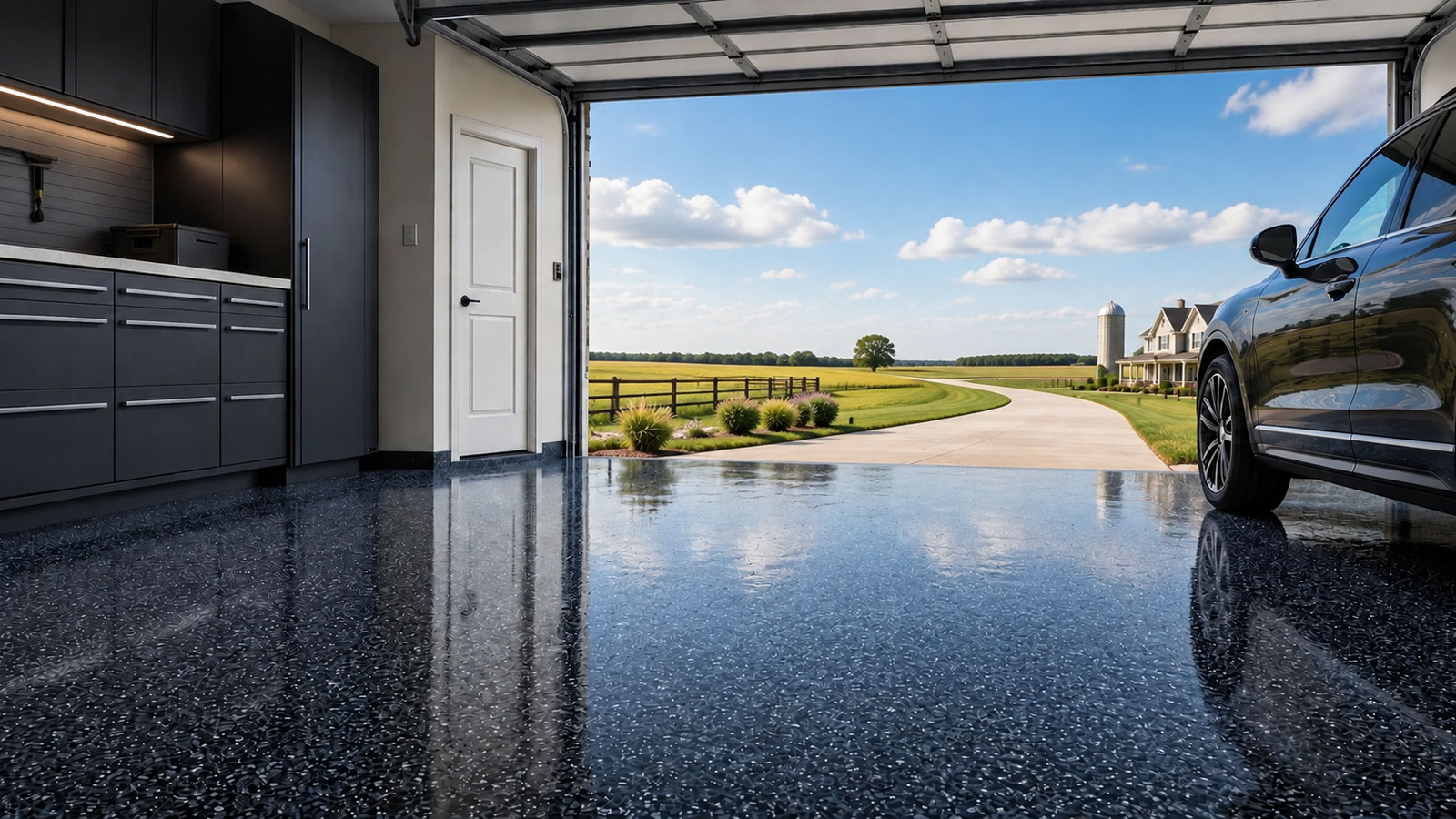
Garage Floor Coatings in Live Oak, TX
Learn about epoxy, polyaspartic and flake systems for garages in Live Oak and the northeast San Antonio corridor.
Floor Coating Information for Live Oak, TX
Live Oak has a more specific water-management story than the generic claim that Texas gets heavy rain. The city's public-works flood guidance identifies three flood sources: West Salitrillo Creek, East Salitrillo Creek and a named tributary of Cibolo Creek. Its comprehensive-plan baseline also describes drainage generally moving northwest to southeast, with East Salitrillo Creek crossing much of the city. Those are citywide facts, not proof that any particular garage has flooded. They do make the history of water at an individual driveway an essential question before coating.
The city's 2022 comprehensive-plan baseline places the East Salitrillo Creek drainage area southwest of the I-35 and Loop 1604 junction and describes a reservoir associated with Martinez Creek Dam in the Live Oak City Park area. Homes in different parts of the city may therefore face very different lot and driveway conditions. A coating installer should check the actual threshold, stains, slope and damp areas rather than infer slab moisture from a mapped watershed.
Live Oak also shares the hot regional climate: the city's planning baseline lists a normal July high of about 96°F and an average 28 inches of annual rainfall. In an open garage, temperature and moisture conditions affect project timing and preparation. The correct specification depends on concrete soundness, removal of old finishes, cleaning, traction, the complete epoxy or polyaspartic system and the owner's schedule—not merely a promise that a coating is durable.
Local Market Insight
Live Oak identifies West Salitrillo Creek, East Salitrillo Creek and a Cibolo Creek tributary as flood sources. A residential coating proposal should distinguish documented regional drainage from actual evidence of water at the garage.
What Affects Garage Floor Coating Cost in Live Oak?
A Live Oak project quote needs to account for both the concrete and the building entry. The same-size garages can differ in old paint, cracks, threshold configuration, previous repairs and signs of recurring water.
Because the municipality documents specific local waterways and drainage concerns, homeowners should ask how an installer distinguishes coating preparation from any exterior runoff repair. Those are not the same line item, and a coating is not a substitute for drainage work.
- Old coatings and sealers: If the floor has been painted or sealed, incompatible treatments may need removal before grinding and a new coating. The history of the finish should be documented.
- Cracking and spalled concrete: Pitting, repaired cracks, surface breakdown and joints should be inspected individually. Their condition controls the repair scope, not the garage's address within Live Oak.
- Water entry and threshold: The city's mapped creek systems justify asking about past rainwater problems, but only the lot reveals its actual runoff route. Grading and drainage corrections are separate from coating.
- Moisture or contamination checks: Recurring damp areas, oil, salts, cleaners or storage residue may require investigation and additional preparation. Don't confuse a wet driveway with evidence of vapor passing through the slab.
- Access and details: Steps, stem walls, drains, shelving and limited staging room affect prep time and edging. Clarify whether everything in the garage must be moved before the installation crew arrives.
- Surface texture and cure: A wet-prone entry can make traction important. Flake texture, final topcoat and summer temperatures also affect cleaning and when parked vehicles can safely return.
Call for a clear, project-specific estimate—or request one online.
Live Oak's Creeks and the Difference Between Floodplain and Garage Moisture
Live Oak's public-works department names West Salitrillo Creek, East Salitrillo Creek and a tributary of Cibolo Creek as sources of local flooding. Its planning material describes the East Salitrillo basin as covering much of the area southwest of the I-35 / Loop 1604 junction and mentions the Martinez Creek Dam reservoir at Live Oak City Park. These details are valuable because they identify the water systems that actually shape local runoff. They do not establish whether water has ever crossed the threshold of a specific garage.
The city recommends maintaining gutters, downspouts, inlets, culverts and drainage channels, recognizing that blocked routes can worsen flooding. For a homeowner considering a floor coating, those same observations suggest practical site questions: where does roof water discharge; does driveway runoff pool at the door; is there evidence of a wet line along the slab perimeter; and has the floor remained damp when nearby concrete was dry?
A coating contractor can evaluate visible slab issues and explain when moisture testing or further diagnosis makes sense. However, if storm runoff routinely enters under a door, a seamless finish is not a replacement for drainage correction or building-envelope work. Burying existing contamination or distress under a decorative layer does not make the underlying problem disappear.
Before obtaining bids, photograph recurring water patterns after rainfall and note which openings are affected. Provide that history to each contractor. A proposal that specifies grinding, repairs, testing when appropriate and any excluded drainage work is more useful than a simple promise of a water-resistant coating.
Live Oak Climate, Sunlit Entries and Everyday Maintenance
Live Oak's own comprehensive-plan baseline lists a normal July daily maximum around 96°F and average annual rainfall around 28 inches. Those figures help explain why both a hot summer installation day and a wet garage entry deserve attention. The precise temperature of an individual concrete floor and its moisture conditions still require observation or measurement at the site.
Open garage doors expose outer strips of floor to direct sun while most of the interior remains shaded. Different temperatures can affect how coating products are handled and cured. A contractor should follow the full system's application and recoat windows and describe what happens if weather conditions change between preparation and application.
Decorative flakes and textured topcoats are choices about appearance and practical traction, not just cosmetics. A very smooth glossy finish might be harder to walk on when shoes or car tires bring in water; a coarser finish may require firmer brushing during cleaning. Compare samples in the context of the garage's actual use and the cleaning methods the homeowner is willing to maintain.
Vehicles can track in road dust, sand, rainwater and oil. Garages used as workshops add grease, solvents or other residues. Proper preparation before installation and prompt spill cleanup afterward both matter. A coated floor can be easier to keep clean than porous bare concrete, but neither the local climate nor a premium product excuses neglected maintenance.
Ask each bidder for the sequence of inspection, grinding, repair, coating, topcoat and cure, plus written dates when foot traffic and vehicles may return. Those details are especially important when the garage is needed for everyday parking.
Frequently Asked Questions
Do Live Oak's creeks mean my garage will have moisture problems?
No. The city identifies West and East Salitrillo Creeks and a Cibolo Creek tributary as local flood sources, but your property's actual grade, water history and slab condition must be checked independently.
Can coating stop stormwater from coming under my garage door?
No. If runoff crosses a threshold during rain, identify the drainage or entry problem first. A floor coating may improve cleanability, but it is not a substitute for correcting water flow.
Does Live Oak's hot summer affect coating installation?
It can. The city's baseline July high is roughly 96°F, and an exposed slab can be hotter than shaded concrete. Application and cure decisions should follow the chosen system's specifications.
Is a textured flake floor useful in a Live Oak garage?
Texture may help with footing where rainwater is tracked indoors. Discuss the desired level of grip alongside cleaning, appearance and the way cars, tools or stored equipment will use the space.
What should I tell the estimator about previous flooding?
Share photographs and dates of any water entry, known drainage work, stains, damp areas and prior floor finishes. Those details help separate preparation needs from concerns that may require another qualified trade.
Live Oak Neighborhoods & Local Context
Typical Two-Car Garage
$3,000–$5,500
Planning range only. Final pricing depends on floor size, concrete condition, preparation, coating type, and finish options.
Helpful Guides
Other Service Areas