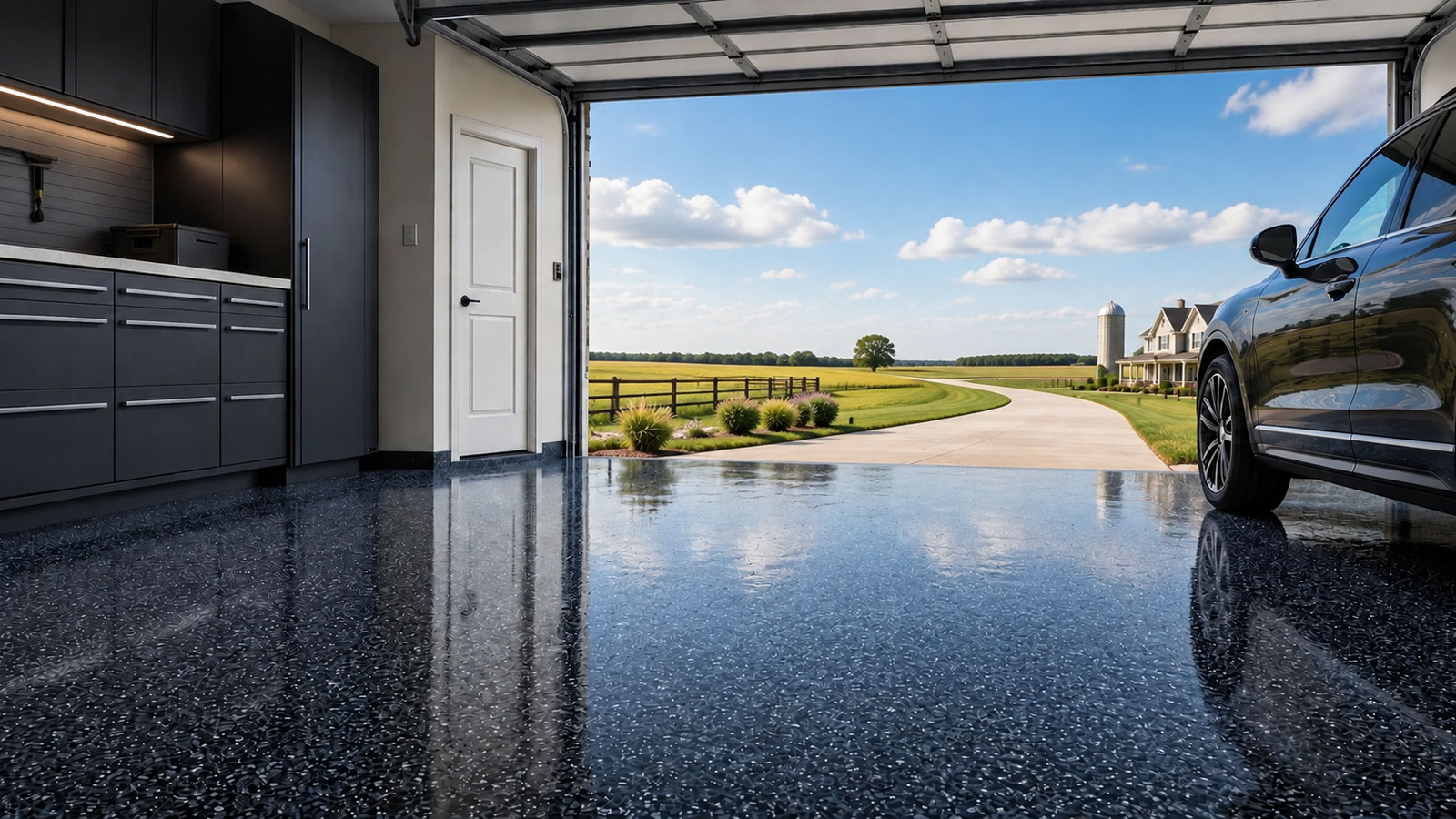
Garage Floor Coatings in Converse, TX
Garage floor coating guidance and estimate requests for Converse homeowners in eastern Bexar County.
Floor Coating Information for Converse, TX
Converse is a changing eastern Bexar County community, not simply an interchangeable San Antonio suburb. The city commissioned a major comprehensive-planning process beginning in 2024 and published its Converse 2050 plan in December 2025. That plan considers evolving land use, streets, infrastructure and economic resilience. U.S. Census estimates put the city at 32,481 residents in July 2025, about 17 percent above its 2020 estimate base. Growing neighborhoods and established homes create varied garage histories, but no planning statistic establishes the condition of an individual slab.
Transportation planning offers another useful distinction. Converse's new plan proposes updating the earlier 2012 Major Thoroughfare Plan to reflect roads added or extended and changes in future land use. Different street networks and development settings can change the way people use garage entrances and park vehicles. For coating, the practical questions concern each property's threshold, driveway slope, vehicle use and whether rainwater reaches the concrete.
Like the rest of northeast San Antonio, Converse experiences hot summers and episodes of significant rainfall. A floor can be shaded inside while the threshold becomes hot in direct sun; cleaners, oil and old finishes can also interfere with coating adhesion. Epoxy, polyaspartic and decorative-flake options should therefore be evaluated after slab inspection, suitable mechanical preparation and an honest discussion of the garage's intended use.
Local Market Insight
Converse's 2025 population estimate and Converse 2050 planning update document a growing municipality with an evolving street network. Garage condition, access and runoff still have to be assessed on each lot.
What Affects Garage Floor Coating Cost in Converse?
A Converse quote should not assume a new subdivision garage and an older, frequently used floor have identical preparation. The city's population growth and changing infrastructure provide context, but visible slab evidence must determine repairs, surface removal and coating requirements.
Two equally sized floors can differ in old coatings, cracking, working-garage contamination, access and the time vehicles must remain out of the space. Ask for an itemized project plan before comparing prices.
- Surface history: A garage might have old paint, sealer, bare concrete or prior epoxy. The complete removal and profiling requirement depends on the existing surface, not the age of the street.
- Crack and joint preparation: Cracks, patched control joints, pitting and edge damage should be inspected and appropriately repaired before coating. Not every crack is a cosmetic issue.
- Entryway runoff: Converse's evolving roads and neighborhoods do not prove drainage problems at a home. Assess the driveway, gutter discharge and observed wet areas before pricing related work.
- Vehicle and workshop residue: Cars, tools and stored materials may leave oil or chemicals in concrete. Contamination changes cleaning and grinding needs and may affect system selection.
- Space and staging: Garage dimensions, door openings, step edges, shelving and available temporary parking affect labor and scheduling. A floor's area alone does not describe the installation.
- Finish and timing: Flake density, grip, UV at the opening and allowable installation temperatures influence labor, coating selection and the realistic return-to-use plan.
Call for a clear, project-specific estimate—or request one online.
Converse 2050 and the Variety Behind a Garage Door
Converse published its Converse 2050 Comprehensive Plan at the end of 2025 after a planning process that included public engagement in 2024 and 2025. The planning materials address land use, transportation, infrastructure, facilities and economic resilience. Census estimates show population rising from a 2020 estimate base of 27,708 to 32,481 in July 2025. Taken together, those records describe rapid change in the community; they do not show when any owner's garage slab was poured, sealed, patched or repainted.
The residential implications are practical. A more established garage may have layers of old paint or repair compounds. A newer concrete slab may still contain curing products or finishing treatments that require removal or assessment. The installer needs to ask what is on the surface now and whether it will support the proposed coating. A simple visual inspection of the subdivision name is not enough.
The new plan's transportation chapter includes proposed revisions to the 2012 thoroughfare plan to account for new and extended roads. That is meaningful urban context but it does not establish that road traffic has damaged an individual floor. Ask instead about how many cars park in the garage, whether equipment is moved across it, and whether tires, chemicals or previous cleaning treatments have left residues.
A strong bid identifies floor preparation, crack and joint repair, substrate testing when indicated, proposed coating layers and the finish. It should also specify the days vehicles will need to remain outside. Owners can provide photographs of defects and a short history of previous work to keep estimates focused on observable conditions.
Converse Hot-Weather Installation and Garage-Entry Checks
Converse lies within the warm South-Central Texas climate around San Antonio. During summer, the portion of concrete at an open garage door may experience direct sunlight and significantly different conditions from the shaded interior. Before application, a competent installer should check the manufacturer's substrate-temperature limits and manage working and curing time for the system being installed.
Seasonal rain also calls for an on-site assessment. Neither the Converse 2050 plan nor the city's expanding road network proves that any particular lot has flooding or water intrusion. What matters to the garage-floor project is whether gutters direct water across the driveway, the approach slopes toward the opening or repeated dampness appears inside when surrounding surfaces are dry.
If runoff enters under a door, correcting grading or another entry condition can be separate from coating installation. A seamless finish may make cleanup easier, but it cannot fix the outside path of stormwater or repair underlying structural damage. Likewise, not every stain on concrete proves a moisture problem; testing and observation should guide the diagnosis.
Coating appearance is only one decision. A very smooth surface may be appealing but less forgiving of wet shoes, while a textured flake finish changes both traction and cleaning. People using the garage for tools, hobbies or storage should discuss the likely spills, loads and maintenance routine. The installer should describe the entire preparation and cure process and provide a realistic vehicle-return date.
For estimates, note the garage's actual use, historical coating work, areas exposed to sun, recurring water after storms and any repairs already made. Those are the facts most likely to change project scope and ultimately affect durability.
Frequently Asked Questions
Does Converse's population growth mean most garages are new?
No. Census growth shows the city is changing but does not date an individual slab or its previous finishes. Contractors should inspect each floor for paint, sealer, cracking and contamination before coating.
Will a new coating solve driveway runoff in Converse?
No. A coating can make a suitable concrete surface easier to maintain, but a water-entry or grading issue requires separate evaluation. The city's road and infrastructure planning cannot diagnose an individual lot.
Does summer heat affect how my garage is coated?
Yes, potentially. Exposed door thresholds can heat more than shaded floors. The contractor should use the complete system's temperature and cure guidelines and provide a realistic time before cars return.
Do I have to remove an existing painted finish?
An installer should determine whether old paint, sealer or a previous coating is sound and compatible. Mechanical removal is often necessary when existing material would impair adhesion; the actual scope depends on inspection.
What details matter most in a Converse estimate?
Ask about surface grinding, cracks, contaminants, access and edge work, the precise coating layers, traction choices, installation conditions and vehicle downtime. Itemized bids help explain meaningful cost differences.
Converse Neighborhoods & Local Context
Typical Two-Car Garage
$3,000–$5,500
Planning range only. Final pricing depends on floor size, concrete condition, preparation, coating type, and finish options.
Helpful Guides
Other Service Areas